Loft insulation is one of the simplest, most cost-effective energy efficiency improvements you can make to your home. Around a quarter of heat in an un-insulated home is lost through the roof. Properly insulating your loft can save you £200–£300 per year on heating bills and usually pays for itself within two to three years. This guide covers everything from material options to government grants that could cover the full cost.
Why Loft Insulation Matters
Heat naturally rises, and in a poorly insulated home, a significant portion of the warmth you pay for escapes through the roof. The Energy Saving Trust estimates that insulating your loft to the recommended depth of 270mm can save a typical semi-detached house around £255 per year. Beyond the financial savings, proper insulation makes your home warmer in winter and cooler in summer, improving comfort and reducing your carbon footprint.
Types of Loft Insulation
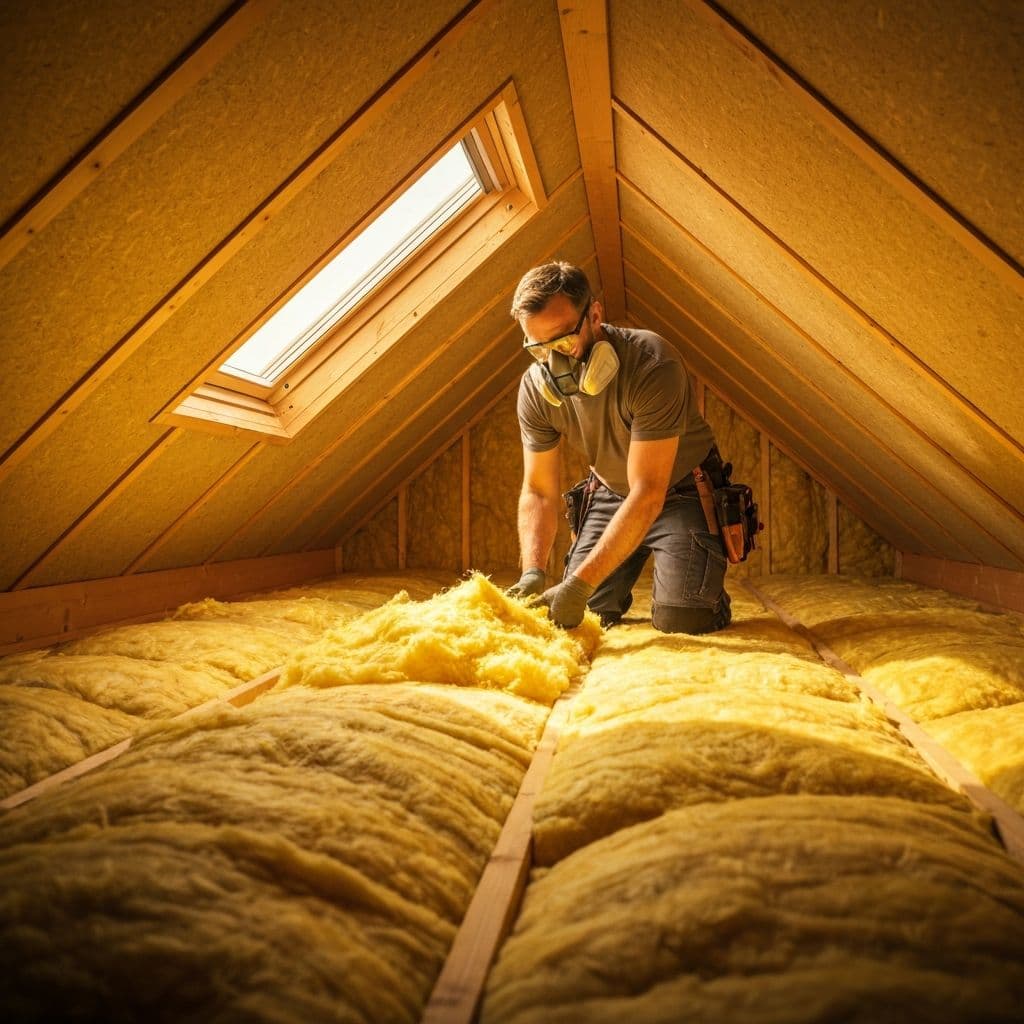
Mineral wool rolls (glass wool or rock wool) are the most common and affordable option. They are laid between and over the ceiling joists in your loft. Loose-fill insulation (cellulose fibre or mineral wool granules) is blown into the loft space and is ideal for lofts with irregular joist spacing or hard-to-reach areas. Rigid insulation boards offer higher thermal performance per unit thickness and are useful if you want to convert your loft into a living space. Spray foam insulation adheres directly to the underside of the roof, but be aware that some mortgage lenders have concerns about spray foam.
Installation and Costs
Professional installation of mineral wool insulation in a standard loft costs £300–£600. DIY installation is straightforward and can reduce this to under £200 for materials alone. If your loft already has some insulation, you may just need to top it up to the recommended 270mm depth. The Great British Insulation Scheme (GBIS) provides grants for eligible households, and some local councils offer free or subsidised loft insulation for vulnerable households.
Important Considerations
Ensure your loft has adequate ventilation to prevent condensation and damp. Do not insulate over or around electrical cables without checking with a qualified electrician. If you use your loft for storage, you may need to install raised boarding above the insulation to avoid compressing it (which reduces its effectiveness). If you have a cold water tank in the loft, insulate around it but not under it, so some heat from below keeps it from freezing.
Key Takeaways
- Loft insulation can save £200–£300 per year on heating bills.
- The recommended insulation depth is 270mm (approximately 10.5 inches).
- Professional installation costs £300–£600; DIY is under £200.
- Government grants may cover the full cost for eligible households.
Frequently Asked Questions
Can I insulate my loft myself?
Yes. Laying mineral wool rolls is a straightforward DIY job. Just ensure you wear protective clothing and a dust mask.
Will spray foam insulation affect my mortgage?
Some lenders are cautious about spray foam due to concerns about roof timber inspection. Check with your lender before proceeding.
How long does loft insulation last?
Mineral wool insulation can last 40+ years without needing replacement, making it a long-term investment.
Written by
Chris Walton
ABBE Level 5, Retrofit Assessor
This guide has been written and fact-checked by a qualified professional to ensure accuracy. All information is regularly reviewed and updated. Wisehande editorial standards require expert authorship and peer review for every guide we publish.